
Table of Contents
- What You'll Need Before You Start Layering
- Choose Your Base Chain and Understand Best Necklace Lengths for Layering
- Step 1: Start with a Lightweight Base Layer
- Step 2: Add a Second Chain with Contrast
- Step 3: Incorporate Pendants and Charms
- How to Stop Necklaces from Tangling
- Mixing Metals and Materials for a Curated Look
- Minimalist Gold Jewellery for Daily Wear
- Frequently Asked Questions
Last Updated: August 31, 2026
What You'll Need Before You Start Layering
Layering necklaces elevates your everyday jewellery without requiring a completely new collection. Gather at least two chains of different lengths: a delicate base layer and something with more presence on top. Consider rolo chains for a classic look, rope chains for texture, or curb chains for structure.
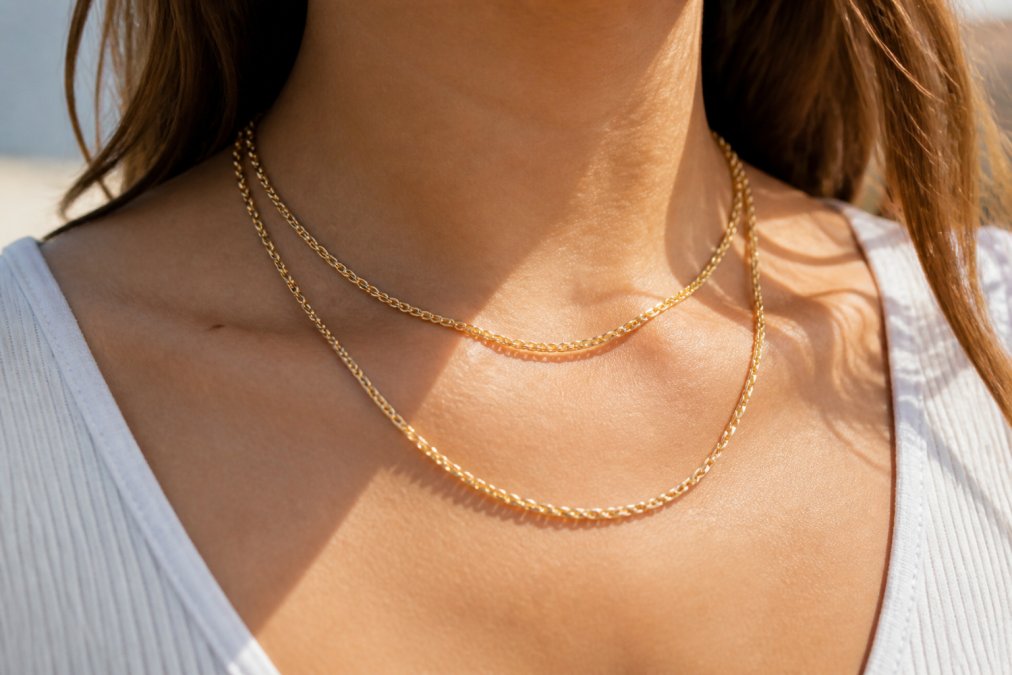
Beyond chains, pendants and charms add personality. A simple pendant on your longest chain creates focal points without overwhelming your neckline.
Quality matters. Tarnish-resistant metals like 18K gold-plated or sterling silver keep your layered necklaces polished through regular wear. Gemini Lulu's collection includes pieces specifically designed for layering, such as the Layered Star and Moon Pendant Necklace in 18K Gold at £35.00, which features a dual-layer design that works beautifully as a standalone piece or combined with additional chains.

Choose Your Base Chain and Understand Best Necklace Lengths for Layering
The foundation of any successful layered necklace look is selecting the right base chain, your lightest, most delicate piece that sits close to your neck without competing with the layers you'll add on top.
Standard lengths and how they work together
Understanding necklace lengths is crucial when layering. A shorter choker sits at the collarbone, a medium length sits just below it, and a longer chain hangs slightly lower. For a three-chain layered look, combine a shorter, a medium, and a longer length for clear visual separation. Each layer should have its own distinct space on your neckline.
The spacing between lengths matters more than people realise. A shorter and medium combination can sit too close together. Instead, jump from a shorter length to a medium-long to a longer length for clear visual separation that prevents tangling and clutter.
Adjusting lengths for your neckline and body type
Not every standard length works for every person. A round neckline accommodates shorter layers beautifully, while a V-neck benefits from slightly longer chains that follow the neckline's line. Longer necks can wear longer base chains, while shorter necks benefit from keeping the shortest layer around a comfortable, shorter length.
Petite frames look best with delicate chains and shorter lengths overall, while taller frames can carry longer chains and bolder weights. Experiment with what feels right on your body rather than following rules rigidly.
Step 1: Start with a Lightweight Base Layer
Your base layer is the foundation of your entire layered necklace look. Choose the thinnest, lightest chain you own, a rolo chain or fine link chain works perfectly because it provides structure without weight. This chain should sit closest to your skin, typically at a shorter to medium length depending on your proportions.
The base layer creates the visual foundation without competing for attention. Many people mistake choosing a thick, statement chain as their base, which immediately makes layering look unbalanced and heavy. Gold-plated or sterling silver work beautifully because they're neutral enough to pair with virtually any metal finish you add on top.
Consider whether you want your base layer to be visible or subtle. Some prefer a barely noticeable base layer, letting upper layers do the talking. Others choose a base layer with texture, perhaps a rope chain, that peeks through and adds visual interest. Both approaches work.
Step 2: Add a Second Chain with Contrast
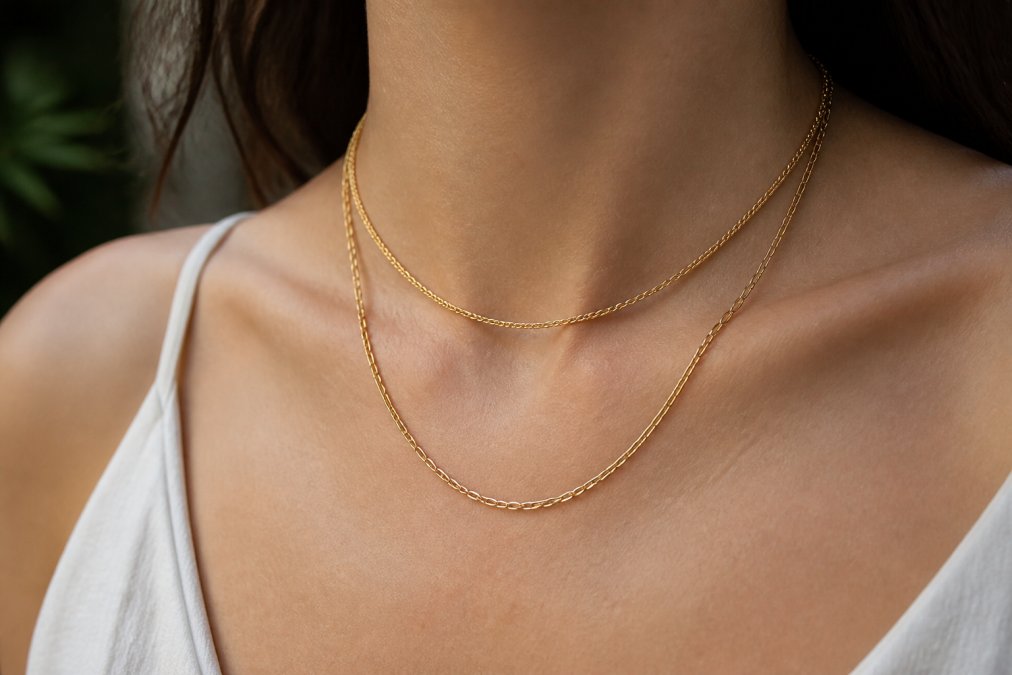
Once your base layer is in place, your second chain should introduce contrast. If your base layer is a fine link chain, your second layer might be a curb chain or rope chain with more visual presence.
The length of your second chain is critical. If your base layer is a shorter length, your second layer should be at least a medium length, creating clear separation and reducing tangling. This is where you can introduce metal variation if you like. Rather than mixing metals randomly, choose a cohesive approach: all gold-plated pieces, or deliberately mixing warm gold with cool silver for a modern aesthetic.
The Gemini Lulu 18K Gold-Plated Coin Layered Chain Necklace at £35.00 provides a second layer with a coin pendant that adds visual interest without overwhelming your look.

Step 3: Incorporate Pendants and Charms
Pendants and charms transform a simple layered necklace setup into a statement. The key is restraint: a single meaningful pendant on your longest chain, or one small charm on your middle layer, is more effective than scattering pendants across all chains.
When selecting a pendant, consider its size relative to your chains. A large, ornate pendant works better on a longer, thicker chain. A delicate pendant suits a finer chain and sits more elegantly against your skin. Meaningful pendants work beautifully in layered necklaces, a small locket, birthstone charm, or initial pendant on your longest chain creates a focal point that draws the eye downward.
Minimalist pendants suit layered necklaces better than ornate ones. A simple geometric shape, tiny star, or delicate moon pendant complements your chains rather than competing with them. The Gemini Lulu Layered Star and Moon Pendant Necklace in 18K Gold at £35.00 demonstrates this principle, the pendants are elegant and understated, allowing the layered design to shine.
How to Stop Necklaces from Tangling
Tangling is the most common frustration when layering necklaces, but it's entirely preventable with the right techniques. Chains sitting too close together, chains of similar weight intertwining, and chains moving against each other during wear are the primary causes.
Using a layering clasp for tangle-free styling
A layering clasp is a small device that attaches to your chains at the clasp point, separating them so they can't intertwine. Each chain has its own clasp attachment, preventing them from sliding around each other. Attach each chain to its own loop on the clasp rather than all chains to a single clasp point. This keeps them physically separated at the back of your neck, where most tangling occurs.
If you don't have a layering clasp, you can create a similar effect by using individual jump rings to attach each chain to your clasp at slightly different points, creating separation.
Spacing chains to prevent intertwining
Chains that are too close in length will sit almost on top of each other and move together, creating tangling. Chains that are clearly spaced apart have clear visual separation and move independently.
Storing layered necklaces correctly also prevents tangling. Keep each chain separate or use individual compartments rather than throwing them together in a jewellery box. Some people hang their chains on a jewellery stand, which keeps them untangled and makes selecting your daily layers easier.
Choosing the right chain weight and type
Heavier chains tangle less frequently than delicate ones because they have more weight and structure. A rope chain or curb chain sits more stably than a fine link chain. If tangling is a persistent problem, choosing heavier chains reduces the issue significantly.
Rolo chains, with their rounded links, slide past each other more easily than flat chains. Rope chains, with their twisted structure, have natural separation built in. Mixing chain types can actually help prevent tangling, a fine link chain paired with a rope chain and a curb chain creates textural variety that prevents them from sitting identically and intertwining.
Mixing Metals and Materials for a Curated Look
The traditional rule about never mixing metals has evolved. Modern styling embraces metal mixing when it's intentional and cohesive. One effective approach is mixing warm and cool metals deliberately: all pieces in warm gold-toned metals create harmony, or mixing cool silvers with warm golds works beautifully when intentional.
Materials matter as much as metals. Combining 18K gold-plated pieces with sterling silver creates visual interest because the materials have different weights and finishes. Freshwater pearls mixed with chain necklaces add texture and sophistication. A curated look means every piece serves a purpose and works with the others.
Consider the finish of your metals as well. A high-shine gold-plated chain paired with a brushed gold-plated chain creates visual variation without clashing. Mixing polished and textured finishes adds depth to your layered look.
Minimalist Gold Jewellery for Daily Wear
Layered necklaces designed for daily wear should prioritise minimalist aesthetics and durability. Gold jewellery, particularly 18K gold-plated pieces, offers the perfect balance of elegance and wearability. These pieces work in professional settings, casual environments, and everything in between.
The beauty of minimalist gold jewellery is its versatility. A simple layered necklace in gold-toned metals works with virtually any outfit. For daily wear, focus on pieces that are comfortable against your skin. Lightweight chains won't feel heavy after eight hours of wearing them. Tarnish-resistant gold-plating ensures your jewellery maintains its lustre through regular wear without constant maintenance.
The minimalist approach to layering means avoiding overly trendy pieces that might feel dated in a year. Instead, choose classic chain types and simple pendants that transcend seasonal fashion. Gemini Lulu's approach emphasises this philosophy, crafting pieces to celebrate individuality while maintaining timeless elegance. The Double-Layered Chain Necklace at £28.00 demonstrates that layered necklaces don't require significant investment, accessible pricing combined with quality materials means you can build a curated collection without financial strain.

Layering necklaces transforms a basic jewellery collection into a sophisticated, personalised accessory wardrobe. Once you grasp the fundamentals of proportions, chain weights, and how different pieces work together, you'll create layered looks that feel effortlessly elegant. Start with quality base pieces from Gemini Lulu's collection, experiment with different lengths and textures, and invest in a layering clasp to eliminate tangling. The result is a versatile, curated jewellery look that celebrates your individual style while maintaining timeless sophistication.
| Element | Best Practice | Why It Matters |
|---|---|---|
| Base layer | Lightweight, shorter to medium length | Provides foundation without bulk |
| Second layer | A few centimetres longer than base | Creates clear visual separation |
| Chain spacing | At least a few centimetres between lengths | Prevents tangling and intertwining |
| Pendant placement | One meaningful piece on longest chain | Creates focal point without clutter |
| Metal mixing | Intentional, cohesive approach | Feels curated rather than accidental |
| Daily wear metals | 18K gold-plated or sterling silver | Durable, tarnish-resistant, elegant |
According to jewellery care guidelines from the British Jewellers' Association, proper storage and gentle handling of layered necklaces extend their lifespan significantly. Research from fashion styling studies in contemporary jewellery shows that intentional layering creates more sophisticated visual impact than single statement pieces. The Consumer Association guidance on jewellery quality and durability emphasises that tarnish-resistant materials and proper clasp systems are essential for everyday jewellery that withstands regular wear.
Frequently Asked Questions
What is the trick for layering necklaces without them tangling?
The key is spacing and using a layering clasp. Keep chains at different lengths so they don't sit directly on top of each other, and choose chains with different weights, heavier chains stay in place better. A layering clasp attaches multiple chains to a single point at the back of your neck, preventing them from intertwining. Rolo chains and curb chains can resist tangling better than some delicate chains because their links are sturdier and less likely to catch.
What are the best necklace lengths for layering?
Start with a choker or collar length as your base, add a slightly longer layer for the middle, and finish with a longer piece. These measurements ensure each necklace sits at a different height on your body. For longer stacks, add a very long piece. The gaps between lengths prevent crowding. Adjust based on your neck length and neckline, shorter necks suit closer spacing, while longer necks can accommodate wider gaps between chains.
How do I style minimalist gold jewellery for daily wear?
Choose dainty chains in 18K gold-plated or sterling silver finishes that are tarnish-resistant and won't require constant maintenance. Layer 2-3 pieces maximum for a minimalist look, avoid statement pieces in favour of simple geometric pendants or no pendants at all. Keep the overall weight light so the necklaces sit comfortably against your skin throughout the day. Gemini Lulu's gold-plated chains, like the Coin Layered Chain Necklace (£35), offer affordable luxury that holds up to regular wear.
How many necklaces should I layer for a balanced look?
Two to three necklaces create a balanced, intentional stack without looking cluttered. A single base chain plus one contrasting piece is the safest starting point. Add a third only if it has a distinctly different length or texture, for example, a dainty shorter chain, a textured medium rolo chain, and a longer chain with a small pendant. More than three risks an overcrowded appearance, especially if they're similar in weight or finish.
This article was written using GrandRanker