
Table of Contents
- Understanding Gold Plated Jewelry and Why It Needs Care
- What You'll Need to Clean 18K Gold Plated Jewelry
- Step-by-Step Process to Clean Your Gold Plated Pieces
- Why Does Gold Plated Jewelry Turn Black and How to Prevent It
- Is It Safe to Use Ultrasonic Cleaners on Gold Plated Jewelry
- How to Store Gold Plated Jewellery to Maintain Its Finish
- What to Avoid When Cleaning Gold Plated Jewelry
- How Often to Clean Your Gold Plated Pieces
Last Updated: August 23, 2026
Understanding Gold Plated Jewelry and Why It Needs Care
Gold plated jewelry offers the luxury aesthetic of gold without the premium price tag. When you clean 18k gold plated jewelry, you're caring for a delicate layer of precious metal bonded to a base metal underneath, typically copper or titanium steel. This construction makes pieces like those from Gemini Lulu accessible: the 18-karat gold coating delivers sophisticated shine and warmth, whilst the base metal keeps costs reasonable.

The gold plating itself is microscopically thin, typically between 0.5 and 2.5 microns thick (the American Academy of Dermatology). This delicate layer is vulnerable to harsh chemicals, abrasive scrubbing, and improper storage. The base metal underneath naturally oxidizes when exposed to air, moisture, perfume, lotion, and cosmetic residue. Once oxidation begins, it creates a dark layer that shows through the plating, making your piece look dull or discoloured. Regular cleaning and proper storage prevent this deterioration.
What You'll Need to Clean 18K Gold Plated Jewelry
You don't need expensive specialist products; many common household items work perfectly for cleaning gold plated jewelry. The key is understanding which tools are safe and which ones damage it.

Start with a soft microfiber cloth. This is your most important tool, non-abrasive, lint-free, and gentle enough to buff your jewelry without scratching the delicate gold surface. Avoid paper towels, tissues, or regular cotton cloths, which can leave lint behind and dull the finish.
You'll need lukewarm water. Temperature matters: water that's too hot can cause the base metal to expand at a different rate than the gold coating, potentially loosening the bond between layers (peer-reviewed research). Lukewarm water, roughly body temperature, is ideal for soaking and rinsing without risk.
Mild dish soap is your cleaning agent. Choose a pH-neutral formula without harsh chemicals or abrasive particles. Avoid anything labelled as "antibacterial" or "degreasing," as these often contain ammonia-based compounds that react with the base metal and accelerate oxidation.
For gentle scrubbing, a soft-bristled toothbrush works well, but only sparingly. The bristles should be soft enough that you can bend them easily with your finger.
What to gather:
- Soft microfiber cloth (non-abrasive, lint-free)
- Lukewarm water
- Mild dish soap (pH-neutral formula)
- Soft-bristled toothbrush (optional, for stubborn soil)
- Lint-free drying cloth
- Airtight container for storage
Step-by-Step Process to Clean Your Gold Plated Pieces
Preparing Your Cleaning Solution
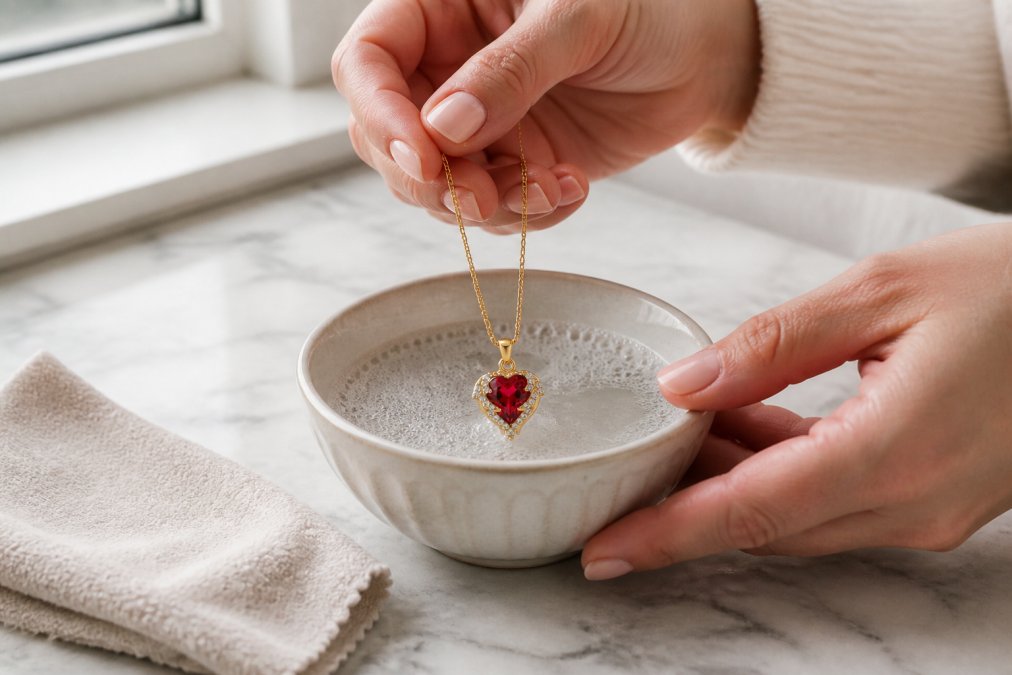
Fill a small bowl with lukewarm water, enough to submerge your jewelry pieces comfortably. Add just a few drops of mild dish soap, you're not trying to create soapy water; a light, barely visible film is all you need. Too much soap requires more rinsing and increases the risk of residue left on the surface. Stir gently to distribute the soap evenly.
Soaking and Gentle Cleaning
Place your gold plated jewelry pieces into the solution and let them soak for 5 to 10 minutes. This soaking time allows the mild soap to loosen cosmetic residue, perfume, lotion, and surface soil without aggressive scrubbing. After soaking, use your microfiber cloth to gently buff each piece, working in one direction rather than scrubbing in circles. Pay special attention to crevices and textured areas where smudges collect.

If you're using a soft-bristled toothbrush, apply minimal pressure and use gentle, short strokes. For pieces with gemstones or pearls, be extra gentle and avoid letting the brush contact gemstones directly; focus on the gold surfaces around them.
Rinsing and Drying Properly
Rinse thoroughly under a gentle stream of lukewarm water, holding each piece for at least 10 seconds and rotating it to ensure all soap residue washes away. Pat dry immediately with a lint-free cloth. Do not air-dry, as water droplets left on gold plated jewelry allow mineral deposits to form as the water evaporates, creating spots that are difficult to remove.
For intricate details or twisted designs, use a corner of the cloth to reach into grooves and crevices. The goal is to remove all moisture before storing.
Why Does Gold Plated Jewelry Turn Black and How to Prevent It
Gold plated jewelry turns black or dark grey when the base metal underneath undergoes oxidation. This chemical reaction occurs when the base metal (usually copper or titanium steel) is exposed to oxygen, moisture, and certain compounds in the air. The dark layer you see is actually oxidized metal showing through microscopic imperfections or worn spots in the gold plating.
Humidity, perspiration, perfume, lotion, and cosmetic residue all accelerate this process. Chlorine and salt water are particularly damaging; even brief contact can initiate rapid degradation of the plating (the CDC).
Prevention is far more effective than trying to reverse tarnish once it's visible. Store your pieces in an airtight container in a cool, dry location away from direct sunlight. Remove jewelry before bathing, swimming, or exercising. Apply perfume and lotion before putting on your jewelry, not after, to prevent these products from sitting directly on the metal surface where they trap moisture.
Is It Safe to Use Ultrasonic Cleaners on Gold Plated Jewelry
Ultrasonic cleaners use high-frequency sound waves to dislodge dirt and debris. However, the vibrations can be too aggressive for delicate plating, potentially loosening or cracking the bond between the gold layer and the base metal over time. Additionally, ultrasonic cleaners often use cleaning solutions that, combined with mechanical vibration, accelerate oxidation of the base metal.
For gold plated jewelry, stick with the gentle hand-cleaning method described earlier. It's slower, but it's the safest approach to maintaining your pieces long-term.
How to Store Gold Plated Jewellery to Maintain Its Finish
Storage is where most damage to gold plated jewelry actually happens. Improper storage accelerates tarnish, causes scratches, and can loosen the plating through friction and moisture exposure.
The ideal storage solution is an airtight container, a jewellery box with a fabric-lined interior and compartments, or even a small ziplock bag. Airtight storage prevents moisture and air from reaching the metal surface, slowing oxidation dramatically. Fabric lining protects the gold surface from scratches.
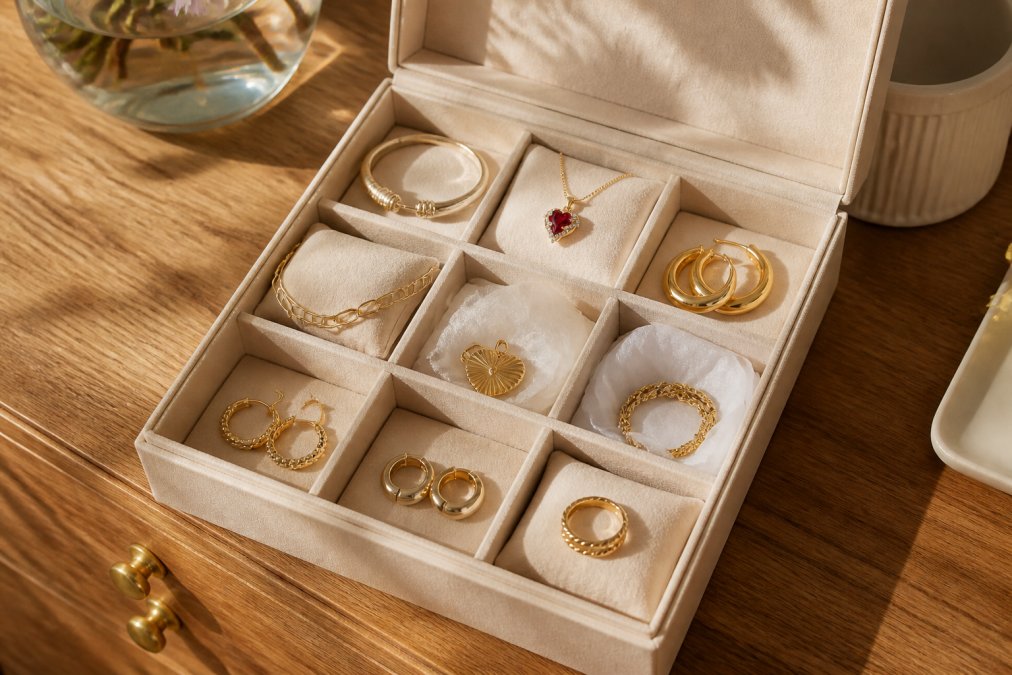
Separate each piece or use dividers to prevent pieces from touching. When gold plated jewelry pieces rub against each other, friction wears the plating away gradually. Keep your storage container in a cool, dry location away from bathrooms and windowsills.
For necklaces with pendants, store them lying flat or hanging separately rather than coiled, as coiling creates pressure points where the plating can crack or flake. Remove jewelry before sleeping, as friction from rolling over in bed wears the plating and sweat accelerates oxidation.
What to Avoid When Cleaning Gold Plated Jewelry
Never use abrasive scrubbers, steel wool, scouring pads, or hard-bristled brushes, these will scratch and wear through the gold plating, exposing the base metal underneath. Avoid all ammonia-based cleaners, which react chemically with base metals and accelerate oxidation. Do not submerge pieces with gemstones or pearls in water for extended periods, as pearls are porous and will absorb water, becoming brittle.
Never use hot water, as temperature extremes stress the bond between layers. Avoid storing gold plated jewelry in plastic bags without ventilation, as plastic can trap moisture against the metal surface. Do not wear gold plated jewelry whilst swimming, showering, or exercising, as chlorine, salt water, and perspiration are all corrosive to the base metal.
How Often to Clean Your Gold Plated Pieces
The frequency of cleaning depends on how often you wear your jewelry. A general guideline is to clean gold plated jewelry every 4 to 6 weeks if you wear it regularly. If you wear a piece daily, clean it monthly. If you wear pieces occasionally or seasonally, cleaning every 2 to 3 months is sufficient.
Jewelry worn close to the skin, such as rings and bracelets, accumulates more perspiration and lotion residue and should be cleaned monthly. Watch for visual signs that cleaning is overdue: if the piece looks dull, has visible smudges, or shows any darkening at the edges or in crevices, it's time to clean. After cleaning, store your gold plated jewelry immediately in its airtight container.
Gold plated jewelry from Gemini Lulu is designed to be worn and enjoyed. By following these cleaning and storage practices, your pieces will maintain their elegant finish and continue to celebrate your individuality for years to come. Regular gentle care, using mild soap, lukewarm water, and soft cloths, keeps your jewelry looking fresh whilst protecting the delicate plating that makes these affordable luxury pieces so beautiful. The British Jewellers' Association provides guidance on jewelry care to help you maintain your collection responsibly.
Frequently Asked Questions
Does 18K gold-plated jewelry tarnish quickly?
Gold plating can tarnish and oxidize over time, especially with daily wear and exposure to moisture, perfume, lotion, and cosmetic residue. However, how quickly this happens depends on the thickness of the plating and how well you care for your pieces. High-quality 18K gold-plated jewelry, like our Minimalistic Heart Necklace, is designed to resist tarnish longer when cleaned regularly and stored properly in an airtight container away from humidity.
Can you clean tarnished gold-plated jewelry safely at home?
Yes, you can safely clean tarnished gold-plated jewelry at home using mild dish soap, lukewarm water, and a soft lint-free microfiber cloth. Avoid abrasive scrubs, ammonia-based cleaners, and vinegar, as these strip the plating. Soak your pieces for a few minutes in pH-neutral soapy water, gently buff away surface soil and smudges, then pat dry immediately. This gentle approach preserves the electroplating while removing oxidation and tarnish.
How often should you clean gold plated jewelry?
Clean your gold-plated pieces every 2-4 weeks if you wear them daily, or every 1-2 months for occasional wear. Regular cleaning prevents buildup of cosmetic residue, lotion, and moisture that cause tarnish. Pieces like our 18K Gold-Plated Twisted Hoop Earrings benefit from monthly maintenance to keep their lustrous shine. More frequent cleaning is necessary if you wear your jewelry during activities that expose it to sweat or chemicals.
What's the difference between cleaning gold-plated and solid gold jewelry?
Gold-plated jewelry requires gentler care because the thin layer of gold coating sits over a base metal. You cannot use abrasive methods, ultrasonic cleaners, or harsh chemicals that would damage the electroplating. Solid gold is more durable and forgiving. With gold-plated pieces, focus on preventative care: avoid prolonged water exposure, remove jewelry before showering or swimming, and store in a dry, airtight container to extend the life of the plating.
This article was written using GrandRanker