
Table of Contents
- What Makes Gold Plated Jewelry Last Through Daily Wear?
- Gold Vermeil vs Gold Plated: Which Holds Up Better?
- Durable Gold Plated Jewelry Options for Every Daily Wearer
- Skin Sensitivity, Metal Allergies and Hypoallergenic Options
- How to Clean Gold Plated Jewellery Without Damaging It
- Can Gold Plated Jewellery Be Repaired or Re-Plated?
- The Cost-Per-Wear Calculation: Is Gold Plated Jewelry Worth It?
- Conclusion
Last Updated: August 14, 2026
Gold plated jewellery is one of the most searched categories in affordable accessories, yet most buyers discover too late that not all plating is created equal. At Gemini Lulu, we've spent considerable time understanding what separates a piece that lasts years from one that fades within weeks. This guide breaks down exactly what makes durable gold plated jewelry for daily wear hold up, which options are worth your money, and how to get the most from every piece you own.
The core argument is simple: durability in gold plated jewellery depends on the thickness of the gold layer and the quality of the metal underneath it.
What Makes Gold Plated Jewelry Last Through Daily Wear?
Gold plated jewellery is a base metal coated with a thin layer of real gold through electroplating. Two factors decide almost everything about longevity: micron thickness and base metal quality.
Micron Thickness: The Number That Decides Everything
Micron thickness measures how thick the gold layer is, expressed in microns (one micron equals one thousandth of a millimetre). Standard gold plating sits at 0.5 microns or less, showing wear at friction points within months. "Thick plating" reaches 1 to 2 microns, meaningfully extending longevity. Gold vermeil requires a minimum of 2.5 microns under established jewellery standards.
A 0.5-micron piece worn daily is a different product to a 2-micron piece, even if both are described as "18K gold plated." Always check the micron specification before buying.
Base Metal: Why It Matters Beyond the Gold Layer
The base metal affects durability in two ways. Some base metals corrode more quickly than others, pushing through the gold layer and causing bubbling or discolouration. Second, the base metal determines whether a piece is hypoallergenic.
The hierarchy:
- Sterling silver (925): The gold standard for plated jewellery. Resistant to corrosion, stable under the gold layer, and generally hypoallergenic.
- Stainless steel: Exceptionally corrosion-resistant, hypoallergenic, and used as the base for PVD-coated pieces.
- Brass and copper alloys: Common in budget plating. Prone to oxidation, causing green skin discolouration and accelerated wear.
- Zinc alloy: The weakest base option. Corrosion-prone and often associated with skin reactions.
If a listing doesn't specify the base metal, assume it's brass or zinc alloy.
Gold Vermeil vs Gold Plated: Which Holds Up Better?
Gold vermeil and gold plated are not interchangeable terms, though they're frequently treated as if they were.
Gold plated describes any base metal with a gold coating. No minimum thickness is legally required in the UK, so quality varies wildly.
Gold vermeil (pronounced "ver-may") is a specific classification: a gold layer of at least 2.5 microns over a sterling silver base. For daily wear, vermeil wins on durability. The trade-off is price: vermeil pieces cost more than standard gold plated equivalents.
PVD Coating: The Third Option for Active Wearers
Physical Vapour Deposition (PVD) bonds a thin layer of titanium nitride to stainless steel using a vacuum process. The result is a gold-coloured surface significantly harder than electroplated gold and far more resistant to water, sweat, and friction.
PVD-coated stainless steel is the most durable option for genuinely active daily wearers: those who shower in their jewellery, exercise without removing pieces, or work in wet environments. The limitation is that PVD coating cannot be re-plated and the base metal is not precious.
Durable Gold Plated Jewelry Options for Every Daily Wearer
The market for durable gold plated jewelry for daily wear has matured considerably.
| Brand / Type | Plating Type | Base Metal | Microns | Best For |
|---|---|---|---|---|
| Gemini Lulu | 18K gold plated | Quality base | Stated per piece | Milestone & everyday elegance |
| Vermeil options | 18K gold vermeil | Sterling silver | 2.5+ | Higher durability, daily wear |
| PVD stainless steel | PVD coating | Stainless steel | N/A | Active, waterproof wear |
Gemini Lulu: 18K Gold Plating for Milestone Moments and Everyday Elegance
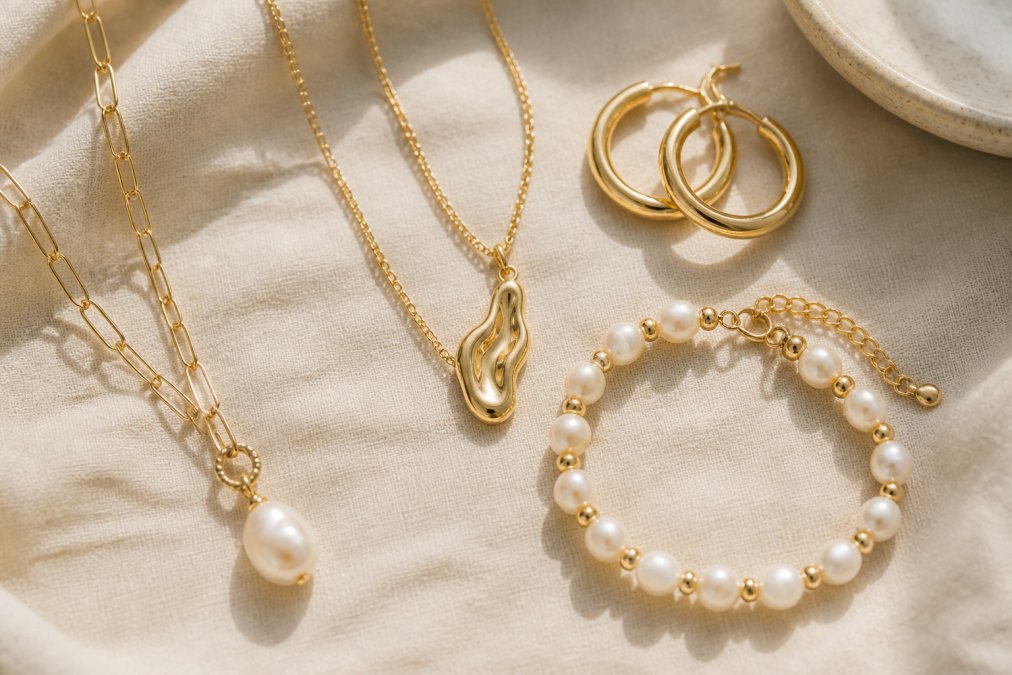
Gemini Lulu is a brand offering durable gold plated jewelry for daily wear that genuinely feels like an occasion. The collection spans 18K gold-plated pieces alongside timeless freshwater pearl designs, with each piece thoughtfully curated to sit at the intersection of accessible luxury and lasting quality.
What distinguishes Gemini Lulu is the editorial intention behind each design. The focus on classic silhouettes means a necklace or pair of earrings bought to mark a milestone will still feel relevant and elegant years later. Freshwater pearls have natural lustre that no synthetic coating can replicate, which is why Gemini Lulu's pearl pieces read as genuinely sophisticated.
Visit geminilulu.com for current pricing and the full collection.
Vermeil-Based Picks: Higher Durability at a Higher Price
For buyers willing to invest more for longer-lasting results, vermeil-based pieces offer the 2.5-micron minimum gold layer over sterling silver. Several brands use recycled 925 sterling silver as their base, adding an ethical dimension alongside durability benefits. Some vermeil brands offer re-plating schemes: when the gold layer eventually wears, the piece can be sent back and replated rather than discarded.
The honest limitation: vermeil pieces still require care. Exposure to chlorine, saltwater, and harsh cleaning products accelerates wear on any plated surface.
PVD Stainless Steel Picks: Waterproof and Sweatproof
PVD-coated stainless steel pieces represent the most resilient category. Brands explicitly market their jewellery as waterproof, sweatproof, and tarnish-free, and the PVD process largely delivers on those claims. The gold colour bonds to the stainless steel at a molecular level, making it significantly harder to chip or scratch than electroplated gold.
The trade-off is feel. Stainless steel is heavier than sterling silver and doesn't have the warmth that precious metal bases provide.
Skin Sensitivity, Metal Allergies and Hypoallergenic Options
Skin sensitivity is one of the most underserved topics in gold plated jewellery guides. The most common culprit is nickel. Nickel is frequently used in base metal alloys to add hardness and reduce cost, and nickel allergy is one of the most prevalent contact allergies in the UK. According to guidance from the British Association of Dermatologists on nickel allergy, nickel sensitivity affects a meaningful proportion of the population, with women disproportionately affected due to higher rates of ear piercing.
The EU Nickel Directive, which continues to apply in the UK under retained law, restricts the release of nickel from items in prolonged contact with skin. Reputable brands will confirm their pieces are nickel-free; always check this before purchasing if you have known sensitivities.
For sensitive skin, the safest base metals are:
- Surgical-grade stainless steel (used in PVD pieces): hypoallergenic and inert
- 925 sterling silver: generally well-tolerated, though some individuals react to the copper content
- Titanium: the most hypoallergenic option, though less common in plated jewellery
A piece described as "gold plated" without specifying the base metal may contain nickel alloys. The green skin discolouration many people associate with cheap jewellery is usually a reaction between sweat and copper or brass in the base metal.
How to Clean Gold Plated Jewellery Without Damaging It
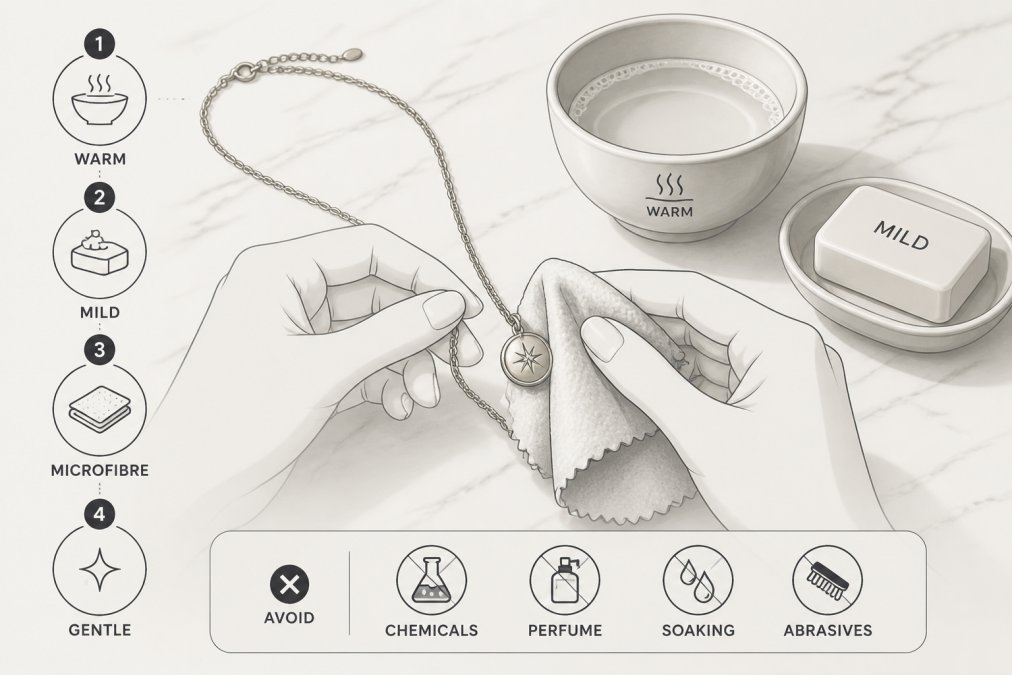
Cleaning gold plated jewellery correctly is the single most impactful maintenance habit you can build. The wrong approach removes the gold layer faster than daily wear does.
The correct method:
- Fill a small bowl with lukewarm water and add a drop of mild, fragrance-free soap.
- Submerge the piece for no more than 30 seconds.
- Use a soft cloth or very soft-bristled toothbrush to gently remove dirt from crevices.
- Rinse under cool, clean water.
- Pat dry immediately with a soft, lint-free cloth.
What to avoid:
- Ultrasonic cleaners: vibrations can loosen the gold layer
- Silver polishing cloths: abrasive and will strip plating
- Toothpaste: mildly abrasive and will dull the surface
- Harsh chemicals: bleach, chlorine, and acetone damage any plating
Storage and Travel Hacks to Extend the Life of Your Pieces
Storage is where most people lose months of wear time without realising it. Pieces left in a pile on a bathroom shelf are exposed to humidity, perfume particles, and friction against other jewellery.
Store each piece separately in a soft pouch or original box to prevent scratching. Keep jewellery away from bathrooms where humidity is highest. Add a small silica gel packet to your jewellery box to absorb moisture. Apply perfume and hairspray before putting on jewellery, not after.
For travel, a roll-up jewellery organiser with individual compartments prevents tangling and scratching. The rule that extends longevity most: put jewellery on last and take it off first.
Can Gold Plated Jewellery Be Repaired or Re-Plated?
Yes, and this fundamentally changes how you should think about long-term value. Gold plated jewellery can be re-plated when the gold layer wears through using the same electroplating method used in manufacture.
The practical considerations:
- Cost: re-plating at an independent jeweller varies; always get a quote before committing
- Quality of the base: re-plating only works well if the base metal is in good condition
- Frequency: a well-cared-for piece on a sterling silver base can be re-plated multiple times over its life
- PVD pieces: PVD coating cannot be re-plated at home or by most high-street jewellers
For buyers who love a particular piece, re-plating is a genuinely cost-effective alternative to replacement. According to the National Association of Jewellers' guidance on jewellery repair, the UK has a growing network of independent jewellers offering re-plating services.
The Cost-Per-Wear Calculation: Is Gold Plated Jewelry Worth It?
Cost-per-wear is a simple framework: divide the price of a piece by the number of times you wear it. A piece that costs £60 and gets worn 200 times over two years costs 30p per wear. A piece that costs £20 and gets worn 10 times before it's discarded costs £2 per wear.
Gold plated jewellery sits in an interesting position on this calculation. The upfront price is low compared to solid gold, but longevity depends heavily on the factors covered in this guide. A cheap piece on a brass base with 0.5-micron plating might genuinely be worse value, even at a fraction of the price of a well-made vermeil piece.
The calculation shifts further in favour of quality plating when you factor in re-plating. A vermeil piece that costs more upfront but can be re-plated twice over five years, maintaining its appearance throughout, delivers a cost-per-wear that competes with solid gold without the significant upfront investment.
For the buyer marking a career milestone or celebrating a personal achievement, a piece from Gemini Lulu's 18K gold-plated collection, chosen for its timeless design and worn consistently, represents a very different value proposition to fast-fashion jewellery bought on impulse and discarded within a season.
The honest caveat: no gold plated piece, regardless of quality, will last as long as solid gold with the same daily wear. The question is whether the cost-per-wear over a realistic lifespan justifies the price. For most buyers in the accessible luxury category, it does, provided they choose pieces with quality base metals, adequate micron thickness, and follow basic care practices.
As noted in the Ethical Consumer guide to sustainable jewellery buying, choosing fewer, better-quality pieces and caring for them properly is consistently the more sustainable approach compared to frequent replacement of budget items.
| Factor | What to Look For | Why It Matters |
|---|---|---|
| Micron thickness | 1 micron minimum; 2.5+ for vermeil | Thicker = longer before base shows |
| Base metal | Sterling silver or stainless steel | Prevents corrosion and skin reactions |
| Nickel-free | Explicitly stated by brand | Prevents contact allergy |
| Re-plating option | Brand scheme or local jeweller | Extends life beyond initial wear |
| Care routine | Soft cloth, mild soap, dry storage | Preserves surface between cleans |
| Cost-per-wear | Price divided by realistic wear count | Reveals true value vs. upfront cost |
Choosing durable gold plated jewelry for daily wear comes down to knowing what you're actually buying: the base metal, the micron thickness, and whether the brand is transparent about both. Most buyers focus on the gold karat number alone, when the base metal and plating depth actually determine how long a piece lasts.
Gemini Lulu's 18K gold-plated collection is designed for informed buyers: women who want pieces that feel meaningful, look elegant, and hold up through daily life. The freshwater pearl designs offer natural lustre that no synthetic material replicates, and the classic silhouettes mean these pieces won't date. Explore the full collection and join the email list at geminilulu.com for new arrivals and care guides.
Frequently Asked Questions
Is gold plated jewelry good for everyday wear?
Gold plated jewelry can work well for daily wear, provided the plating is thick enough and the base metal is high quality. Pieces with at least 1 to 2.5 microns of 18K gold over sterling silver or stainless steel hold up considerably better than thin flash-plated costume jewellery. Avoiding water, sweat and perfume contact extends the finish further. For the most resilient option without removing pieces daily, PVD-coated stainless steel is worth considering.
How long does gold plated jewelry last if worn every day?
With consistent daily wear, standard gold plated jewellery typically retains its finish for six months to two years. Vermeil pieces, with their thicker gold layer and sterling silver base, often last longer. PVD-coated pieces can maintain their colour for several years under the same conditions. The exact lifespan depends on micron thickness, base metal quality, skin chemistry and how carefully you follow care guidelines such as removing pieces before swimming or exercising.
What is the difference between gold plated and PVD gold coating?
Gold plated jewellery is produced through electroplating, where a thin layer of gold is deposited onto a base metal using an electrical current. PVD (Physical Vapour Deposition) coating bonds a harder, more uniform gold-coloured layer to stainless steel at a molecular level. PVD finishes are significantly more resistant to water, sweat, oxidation and corrosion than standard electroplated gold, making them the stronger choice for people who cannot or prefer not to remove their jewellery during exercise or showering.
How can I keep my gold plated jewellery from tarnishing?
Remove pieces before swimming, showering, exercising or applying perfume and lotions. After wearing, wipe each piece gently with a soft, dry cloth to remove skin oils and moisture. Store jewellery individually in airtight pouches or a lined box to reduce exposure to air and humidity. Avoid stacking pieces loosely, as friction accelerates coating wear. Re-plating services offered by several brands can restore the finish once it begins to dull.
Can gold plated jewellery turn your skin green?
Skin discolouration is caused by the base metal beneath the gold layer, not the gold itself. Pieces with a brass or low-quality alloy base are most likely to cause a green tint as the base metal oxidises against skin moisture. Choosing gold plated jewellery on a sterling silver or stainless steel base, and opting for nickel-free, hypoallergenic options, significantly reduces this risk. Keeping pieces dry and clean also slows any reaction between the base metal and skin.
This article was written using GrandRanker