
Table of Contents
- Do Freshwater Pearls Tarnish? The Short Answer
- Understanding Pearl Composition and Why Pearls Lose Their Shine
- How to Clean Freshwater Pearl Necklaces and Other Pieces
- Daily Care Habits to Preserve Lustre and Radiance
- Storing Pearl Jewellery to Prevent Dehydration and Discoloration
- When to Seek Professional Care for Your Pearls
- Conclusion
Last Updated: August 21, 2026
Do Freshwater Pearls Tarnish? The Short Answer
Freshwater pearls do not tarnish in the traditional sense. Unlike metal components that oxidise, freshwater pearls experience gradual loss of lustre caused by surface damage, dehydration, and environmental exposure. The nacre layer that gives pearls their distinctive glow is made of calcium carbonate and organic proteins. This living layer doesn't tarnish, it deteriorates. Understanding this distinction is crucial when deciding how to clean, store, and wear your freshwater pearl jewellery, as many people damage their pearls by treating them like metal jewellery with harsh chemicals or ultrasonic cleaners.

Understanding Pearl Composition and Why Pearls Lose Their Shine
Nacre: The Living Layer That Fades
The nacre is the iridescent coating that makes freshwater pearls prized. It's composed of microscopic layers of calcium carbonate crystals bonded with organic proteins, creating mother-of-pearl. This structure produces the pearl's characteristic lustre and orient, that subtle play of colour beneath the surface.
Unlike a diamond's crystalline structure, nacre is porous and organic. It absorbs and releases moisture, so environmental humidity directly affects how a pearl looks and feels. When nacre dries out, the crystals lose alignment slightly, and light reflects differently. The nacre layer is typically only 0.5 to 2 millimetres thick. Any abrasion, even gentle rubbing with a rough cloth, can scratch the surface and dull the lustre. Once compromised, the underlying mother-of-pearl becomes exposed and the pearl's beauty deteriorates rapidly.
Pearl Surface Damage vs. Metal Oxidation
This distinction is where most confusion occurs. When wearing freshwater pearl jewellery with a metal setting, two different things can happen simultaneously.
Metal components can oxidise. Silver tarnishes naturally when exposed to sulphur compounds in the air. Gold-plated jewellery can lose its plating, revealing base metal underneath, which may then oxidise. This is genuine tarnishing, a chemical reaction that darkens the metal surface.
The pearl itself doesn't undergo this chemical process. Instead, it experiences physical and environmental degradation. The nacre surface gets scratched from contact with skin, clothing, and other jewellery. Cosmetics, perfume, and hairspray leave residue that clouds the surface. Sweat and body oils penetrate the porous nacre and cause discoloration. Extreme dryness causes the nacre to become brittle. None of this is tarnishing, it's damage and deterioration.
Knowing the difference changes your care approach. You cannot polish a pearl like silver to restore its shine; you can only prevent further damage and, in some cases, have the nacre gently cleaned by a professional.
How to Clean Freshwater Pearl Necklaces and Other Pieces
Cleaning freshwater pearls requires a gentle touch. The goal is to remove surface buildup without damaging the nacre.
Safe DIY Cleaning Solutions
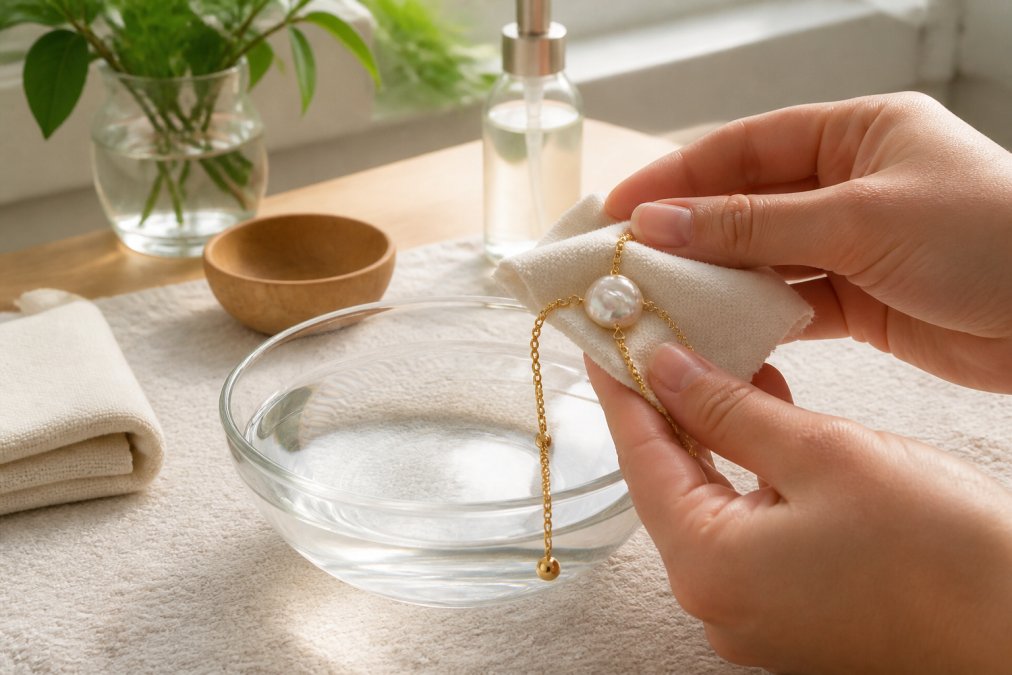
The safest method is a soft cloth and lukewarm water. Fill a small bowl with lukewarm water and add a tiny drop of mild dish soap or baby shampoo. Submerge the pearl jewellery for just a few seconds, then gently wipe it with a soft, lint-free cloth. Pat dry immediately.
For necklaces and bracelets, this method works well. For earrings or rings where the pearl is set in metal, be more cautious, clean the pearl only, avoiding prolonged contact with water on the metal setting.
Some people use distilled water mixed with mild soap, which is gentler than tap water that may contain minerals. Never use hot water, as temperature changes can crack the nacre. Never soak pearls for extended periods, as the porous nacre absorbs water and prolonged submersion can cause internal damage.
What to Avoid: Chemicals That Damage Pearls
Perfume, hairspray, makeup, and body lotion are primary culprits. These products contain alcohol, oils, and chemicals that penetrate the porous nacre or leave a film on the surface. Perfume is particularly damaging because alcohol dries out the nacre and causes discoloration.
Never use commercial jewellery cleaners, ultrasonic cleaners, or steam cleaners. Ultrasonic vibrations are too aggressive for pearls and will crack the nacre. Steam cleaners introduce rapid temperature changes that stress the pearl's structure. Jewellery polishing cloths designed for silver or gold are too abrasive.
Bleach, vinegar, and household cleaning products are off-limits. These are acidic or oxidising and will chemically damage the nacre. Avoid chlorine and saltwater environments, chlorine is corrosive to both nacre and metal settings, and saltwater can dehydrate pearls and corrode metal components.
Daily Care Habits to Preserve Lustre and Radiance
Wear pearls last when getting ready and remove them first when undressing. This prevents contact with perfume, hairspray, and makeup. After wearing, give jewellery a quick wipe with a soft cloth to remove body oils and sweat. This ten-second habit dramatically extends the nacre's radiance.
Avoid wearing pearl jewellery during activities where they might be knocked or abraded, gym sessions, gardening, or rough play can scratch the nacre. Pearls benefit from being treated as special-occasion pieces or worn in controlled environments.
How Skin pH and Perspiration Affect Pearl Longevity
Your skin's pH and perspiration chemistry directly affect how quickly pearls degrade. Acidic perspiration can etch the nacre surface over time, causing discoloration and loss of radiance. Heavy perspiration is particularly problematic, as sweat contains salt, urea, and lactic acid that gradually penetrate the porous nacre and cause internal damage manifesting as yellowing or browning.
This doesn't mean you can't wear freshwater pearls if you perspire heavily. Simply be more diligent about removal and cleaning. Take pearls off during workouts and wipe them after wearing. The Gemini Lulu collection includes adjustable designs like our Adjustable Waterproof Freshwater Baroque Pearl Bracelet that accommodate active lifestyles while requiring the same care principles.

Storing Pearl Jewellery to Prevent Dehydration and Discoloration
Storage is as important as cleaning. Improper storage accelerates nacre degradation and can cause permanent discoloration.
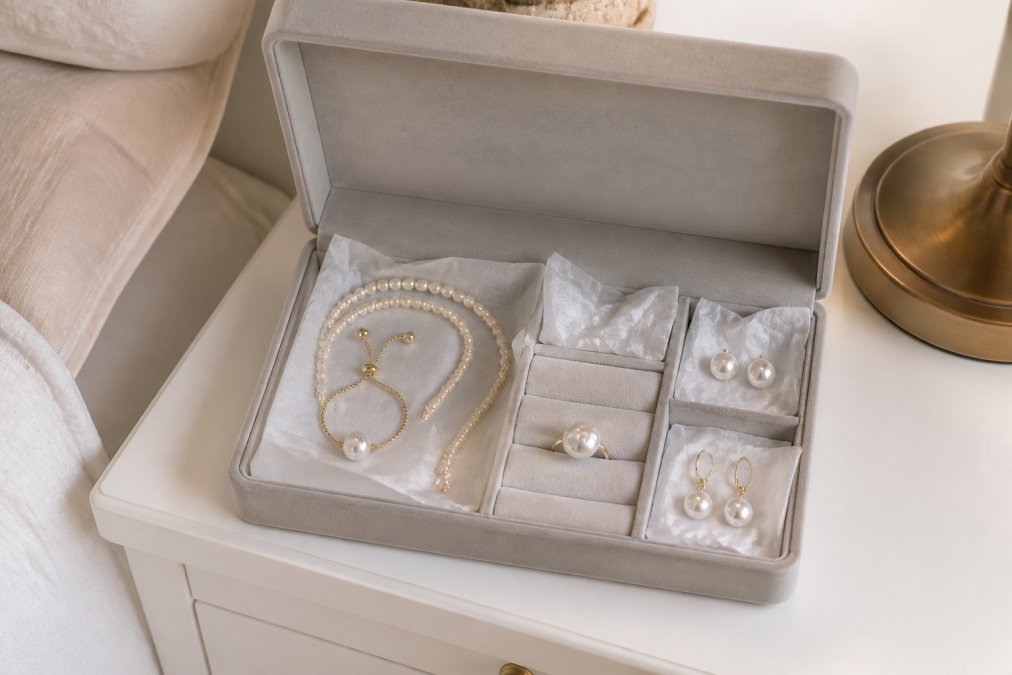
Store pearls in a soft pouch or jewellery box lined with soft fabric. Never use plastic bags or airtight containers, which trap moisture and promote mould growth. Keep pearls away from direct sunlight, as UV light causes the nacre to fade and discolour. Avoid storing pearls near heat sources like radiators or in bathrooms where humidity fluctuates dramatically.
Separate pearl jewellery from other pieces. Pearls scratch easily, and harder gemstones or metal jewellery can damage them. Store necklaces unclasped so the weight doesn't stress the nacre where the clasp attaches.
Storage for Different Climates
In humid climates, use silica gel packets in your jewellery storage box to absorb excess humidity. Ensure good air circulation and never seal pearls in airtight containers.
In dry climates, store pearls in a slightly humid environment. Some people place a small open dish of water near their jewellery storage to maintain moderate humidity around 40-50% relative humidity. A hygrometer lets you monitor the environment.
In temperate climates with seasonal variation, consistency is key. Avoid storing pearls in areas where temperature or humidity fluctuates dramatically. A bedroom closet is better than a bathroom; an interior wall is better than an exterior wall.
When to Seek Professional Care for Your Pearls
If your pearls have become significantly yellowed or darkened, a professional can assess whether the discoloration is surface buildup or internal damage. Surface discoloration can sometimes be gently removed by a specialist.
If the nacre is visibly cracked or chipped, a professional can sometimes repair it. If the pearl has become dull despite proper care, a professional can evaluate whether the nacre is intact.
Restringing is another professional service worth considering. Pearl necklaces and bracelets are typically strung on silk thread, which weakens over time. If you notice fraying thread or a loose strand, have it professionally restrung to prevent pearls from falling and breaking.
Professional cleaning should be rare, perhaps once every few years if you wear your pearls regularly. A qualified jeweller can clean pearls using methods gentler than any home approach.
Freshwater pearls reward careful attention. The distinction between tarnishing and nacre degradation is crucial: metal components oxidise and require polishing, but pearls degrade through physical damage and environmental stress. Protect your pieces by removing them before applying cosmetics or perfume, storing them properly in a stable environment, and cleaning them gently with soft cloth and lukewarm soapy water.
Gemini Lulu's freshwater pearl collection, including pieces like our Gemini Lulu Solis Freshwater Pearl Gold Ring and 14K Gold Plated Pearl & Cubic Zirconia Adjustable Ring, is designed to last when cared for properly. Start with the fundamentals: gentle cleaning, proper storage, and mindful wearing habits. Your pearls will reward you with enduring lustre and beauty.

| Care Task | Frequency | Best Practice |
|---|---|---|
| Gentle wipe with soft cloth | After each wear | Remove oils and residue immediately |
| Mild soap and water cleaning | Monthly or as needed | Use lukewarm water, pat dry completely |
| Storage check | Seasonally | Verify environment stability and cloth condition |
| Professional assessment | Every 2-3 years | Evaluate nacre condition and restring if needed |
| Substance | Risk Level | Why It Damages |
|---|---|---|
| Perfume and hairspray | Critical | Alcohol and chemicals penetrate porous nacre |
| Makeup and lotions | High | Oils and residue build up on surface |
| Chlorine and saltwater | High | Corrosive and dehydrating to nacre |
| Ultrasonic cleaners | Critical | Vibrations crack delicate nacre structure |
| Household acids (vinegar, bleach) | Critical | Chemical damage to calcium carbonate |
According to the Gemological Institute of America's guidance on pearl care, proper storage and regular gentle cleaning are the most effective ways to maintain pearl jewellery's lustre over decades. Research from conservation specialists in museum collections shows that pearls stored in stable, moderate-humidity environments with minimal light exposure retain their radiance significantly longer than those exposed to fluctuating conditions. Additionally, jewellery care standards published by the American Gem Society emphasise the importance of separating pearls from other jewellery during storage to prevent scratching and surface damage.
Frequently Asked Questions
Can freshwater pearls actually tarnish, or is that only a concern with metal?
Freshwater pearls don't tarnish like metal does, they don't oxidise. Instead, the nacre (the outer layer) can become dull, scratched, or discoloured over time through exposure to chemicals, moisture loss, or abrasion. The metal settings (like gold plating or silver) may tarnish separately, but the pearl itself fades rather than tarnishes. This distinction matters: you won't restore a pearl's lustre the way you'd polish tarnished silver.
How does skin pH affect how quickly freshwater pearls lose their shine?
Your skin's natural pH and perspiration create an acidic environment that can gradually weaken the nacre's surface. People with more acidic skin chemistry may notice dullness or discoloration faster, especially if pearls are worn daily without rinsing. Rinsing your pearl jewellery with fresh water after wearing it helps neutralise these acids and extends the pearl's radiance significantly.
What's the safest DIY cleaning solution for freshwater pearl jewellery?
Mild soap (like liquid hand soap) and lukewarm distilled water is the gold standard. Mix a few drops of soap in a bowl of water, dip a soft cloth, and gently wipe the pearl. Avoid ultrasonic cleaners, steamers, and any solution containing vinegar, alcohol, or harsh chemicals, these damage nacre. Pat dry immediately with a soft cloth and allow to air-dry completely before storing.
How should I store freshwater pearl jewellery to keep it from losing its lustre?
Store pearls in a soft jewellery box or pouch lined with tissue, away from direct sunlight, heat, and humidity extremes. Pearls are porous and need moisture balance, too-dry environments cause dehydration and cracking, while damp conditions promote discoloration. Keep them separate from other jewellery to avoid scratches. In humid climates, include a small silica packet in the storage box; in very dry climates, place a barely-damp cloth nearby to maintain ambient moisture.
This article was written using GrandRanker